
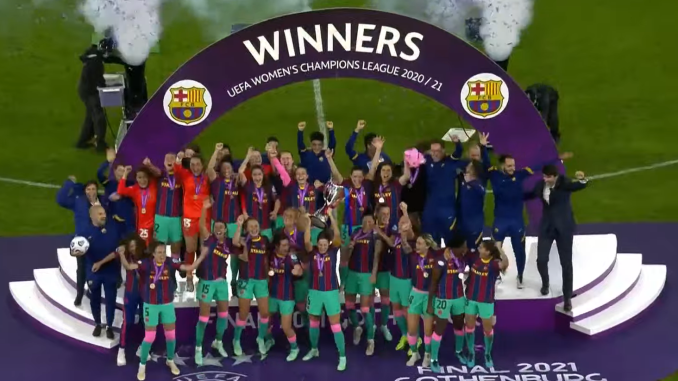
UEFA have announced a revamp of Women’s Champions League format from 2025-26 season onwards.
This season will see the men’s version adopt a new Swiss-system style format but UEFA have now determined that the Women’s Champions League (WCL) will follow suit from next season.
The current 16-team group stage format will be axed and replaced by a 18-team format, where teams will play six different teams – compromising of two teams from three separate seeding pots – in a league system.
All final-round fixtures in this phase will be played at the same time with the top-four finishers receiving a bypass to the Quarter-Finals, whilst those ranked 5-12 will face knockout play-offs.
The top four teams will also be awarded with seeded status for the Quarter-Finals draw, with the second leg of that stage played at home and marks the start of the traditional knockout phase as is currently present.
Those ranked 13-18th will be eliminated and play no further part in the competition.
UEFA have confirmed that the reigning champion plus champions of the top six ranked UEFA countries will automatically qualify for the new group stage format, alongside the runners-up of the top two countries.
UEFA President, Aleksander Ceferin explained that these changes will reflect the “enormous strides” made to improve the competition in recent years.
“The new UEFA Women’s Champions League format and the introduction of a second competition are further demonstration of this commitment and both will be exciting, competitive competitions that allow more players and clubs across the continent to dream of European glory.”
UEFA Managing Director of Women’s Football, Nadine Kessler added: “Despite the success story of the UEFA Women’s Champions League in recent years, we will not stand still.
“Today, we look forward to another fundamental milestone for the professionalisation of European club football.”
There will also be a second women’s competition launched in order to provide a chance for early eliminated clubs to have a chance at an European trophy, which Kessler hopes “… will further incentivise growth domestically and help us to build a strong and open European football pyramid that everyone can be proud of.”
Leave a Reply