
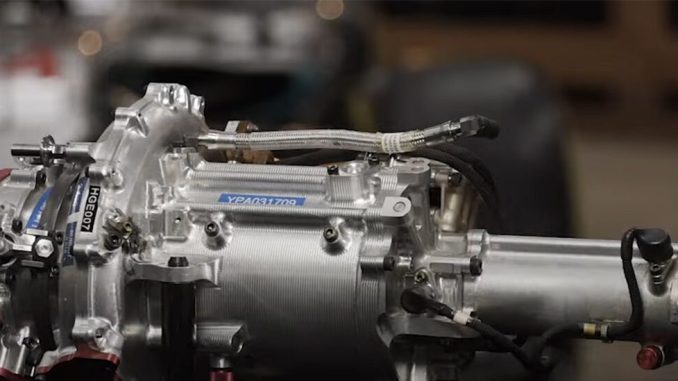
World Motorsport Council have approved plans for Formula One to drop MGU-H element as part of a power unit overhaul from 2026 season onwards.
F1 is set to make changes to rules concerning Power Unit Regulations from 2026 with the framework approved in the final World Motorsport Council meeting of 2021.
There will be four key objectives as part of the regulations which will cover;
- Environmental Message – covering ambitions of achieving 100% sustainable fuel, overall efficiency and switch of focus to electrical power.
- Cost Reduction – Aim of reducing costs across technical, operational and financial regulations within F1.
- Newcomers – Target of enabling new teams to join F1 on a competitive level.
- Protecting Entertainment Value – Ensure powerful and high-revving power unit, car performance, sound, drivers’ ability to race, preventing excessive differentiation.
The new regulations would also see the 1.6-llitre V6 engine whilst increasing electrical power to 350kW, although the MGU-H would be eliminated as part of the introduction of a Power Unit cost cap.
FIA have confirmed that ‘A detailed document of the 2026 Power Unit Regulations will be developed and submitted to the World Motor Sport Council in early 2022.’
World Motorsport Council officials also ratified and approved the 2022 F1 calendar which will remain the same as the provisional calendar with 23 races between 20 March – 20 November, as released by FIA in mid-October.
| Round | Race | Date |
| 1 | Bahrain Grand Prix | 18-20 March |
| 2 | Saudi Arabian Grand Prix | 25-27 March |
| 3 | Australian Grand Prix | 8-10 April |
| 4 | Emilia Romagna Grand Prix | 22-24 April |
| 5 | Miami Grand Prix | 6-8 May |
| 6 | Spanish Grand Prix | 20-22 May |
| 7 | Monaco Grand Prix | 27-29 May |
| 8 | Azerbaijan Grand Prix | 10-12 June |
| 9 | Canadian Grand Prix | 17-19 June |
| 10 | British Grand Prix | 1-3 July |
| 11 | Austrian Grand Prix | 8-10 July |
| 12 | French Grand Prix | 22-24 July |
| 13 | Hungarian Grand Prix | 29-31 July |
| 14 | Belgian Grand Prix | 26-28 August |
| 15 | Dutch Grand Prix | 2-4 September |
| 16 | Italian Grand Prix | 9-11 September |
| 17 | Russian Grand Prix | 23-25 September |
| 18 | Singapore Grand Prix | 30 September – 2 October |
| 19 | Japanese Grand Prix | 7-9 October |
| 20 | USA Grand Prix | 21-23 October |
| 21 | Mexican Grand Prix | 28-30 October |
| 22 | Sao Paolo Grand Prix | 11-13 November |
| 23 | Abu Dhabi Grand Prix | 18-20 November |
‘Detailed analysis’ Ordered Into 2021 Abu Dhabi Grand Prix Controversy
Discussions also took place concerning the controversy that has marred the climax of the 2021 F1 season in Abu Dhabi, where Max Verstappen benefitted from controversial stewarding under a late Safety Car by Race Director – Michael Masi to become the first Dutch champion in F1.
Officials eventually accepted a proposal from the FIA to conduct ‘a detailed analysis and clarification exercise for the future with all relevant parties’ involving teams and drivers.
FIA consequently released a statement in which they acknowledged that Masi’s behaviour had compromised ‘integrity’ of F1 and ‘prompted a large number of reactions from the F1 community and from motor sport in general, as well as in the public.’
Explaining what is hoped to be achieved by this course of action, the FIA iterated that they are seeking ‘to draw any lessons from this situation’ and provide ‘clarity’ for ‘participants, media and fans’ concerning regulations to protect the sport’s ‘competitive nature’ of racing.
It is also hoped that all championships ran under the FIA will benefit from this review to try and prevent future scandals, with ‘identified meaningful feedback and conclusions’ made and inputted into regulations before 2022 season.
Questions however remain about whether Mercedes could launch an legal appeal against the FIA following the denial of their post-race protests, with a decision expected to be announced ahead of the FIA Prize Giving Ceremony on Thursday 16 December 2021.
Leave a Reply