

With 2023 FIFA Women’s World Cup now over, it is time to reflect upon stand-out stars in Sport Grill’s team of the tournament.
As the first tournament to feature 32 teams at a Women’s World Cup, this edition certainly threw plenty of curveballs with shock early exits for teams like Canada, Brazil, Germany and USA, whilst underdogs rose to the fore as several unexpected stars shone upon the world’s stage.
This campaign also saw a new Women’s World Cup record set of 164 goals set in a single tournament reflective of the development across the game, underlining the wide range of stars across every continent who impressed in various ways.
Now, here is my take on the team of 2023 FIFA Women’s World Cup tournament.
Goalkeeper – Mary Earps (England)

Widely considered the best in the world at the start of this tournament, Mary Earps has been absolutely world-class especially during tense wins over Haiti and Denmark in the Group Stage plus a nervy Round of 16 win over Nigeria on penalties.
Earps’ goalkeeping quality shone brightest in the Final because despite finding herself controversially on the losing team, she made several saves to denied Spanish players like Salma Paralluelo and a crucial save to deny Jennifer Hermoso from the penalty spot.
It is therefore fitting that Earps walked away with the Golden Glove after conceding just four goals in seven matches, because she has been exceptional and this experience will only motivate her going into the new season for England and Manchester United.
Special mentions though should go to Australia’s Mackenzie Arnold and Sweden’s Zecira Musovic who were both exceptional in goal, especially with memorable saves during wins over France and USA in Quarter-Final and Round of 16 respectively.
Defender – Ona Batlle (Spain)
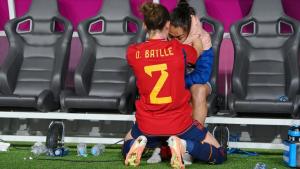
After enjoying her best season for Manchester United last season with her raw attacking pace and movement which saw her contribute one goal and nine assists, Ona Batlle undoubtedly brought that form into the World Cup for Spain.
Although it is hard to match Lucy Bronze – considered the best right-back in the world, Batlle has quietly demonstrated why she is set to rival Bronze at Barcelona this season with her physicality and high-energy runs which proved difficult for oppositional defenders to stop.
There however is little to separate Batlee and Bronze in the defensive stats but despite Bronze toppin tackles and interceptions statistics between the pair at this tournament, Batlle has been simply more impressive overall especially in possession to carry the ball up pitch.
We also shouldn’t forget that Batlle is only 24 years-old and if she continues to progress like she has done in the last 12 months, she has the potential to be even better than Lucy Bronze once she hits her peak.
Defender – Amanda Ilestedt (Sweden)

Sweden’s Amanda Ilestedt entered this World Cup having never scored in a major tournament yet she has been one of the best defenders within this tournament with four goals.
Those four goals also makes her the highest-goalscoring defender at this World Cup with three of her four goals coming from headers during set pieces, which underlined just how exceptional her aerial presence has been at this tournament and especially when defending set pieces too.
Ilestedt also has been a defensive rock for Sweden with her excellent passing completion rate and carries of the ball to spark attacking moves from the back, underlining just how fantastic her campaign has been as a whole.
Defender – Millie Bright (England)
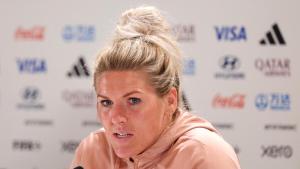
Considering that she had a race against time to be fit for this World Cup after suffering a knee injury in the spring, Millie Bright has enjoyed a brilliant tournament whilst unexpectedly stepping up as captain due to Leah Williamson’s injury.
From last-ditch tackles to interceptions and tight defensive marking as well as her fast track-backs, Bright has been right up there as one of the most resilient defenders who many players have struggled to beat on the attack.
Such has been her presence, Bright has also proven a handful from set pieces at times whilst she even chipped in with an assist – which proved crucial for Lauren Hemp’s goal in their semi-final win over Australia.
Defender – Alex Greenwood (England)
Amidst huge improvement in the left-back position across all 32 teams involved in the tournament, England’s Alex Greenwood has been a stand-out performer with her presence both defensively and when launching attacks up the left flank.
Such is Greenwood’s impact, she has had more touches than any other player at the tournament, whilst she has managed to create more clearances and passes than any other England player, underlining just how resilient her all-round left-back performance has been.
Spain’s Olga Carmona however deserves a honourable mention because at just 23 years-old, she has shown huge potential in her pace and end product as an attacking left-back, although she has lacked the all-round defensive presence of Greenwood but she can only improve in coming years.
Midfielder – Linda Caicedo (Colombia)
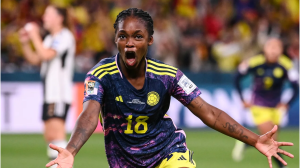
Aged just 18 years-old, Colombia’s Linda Caicedo certainly proved a surprise package as she provided two goals and one assist in her first Women’s World Cup.
Caicedo’s inexperience however didn’t stop her from becoming a key player in Colombia’s shock run to the Quarter-Finals, especially in terms of her attacking play as she made 15 progressive carries and 35 completed progressive passes to drive Colombia’s attack forward.
The 18 year-old also averaged the most goals and assists average per 90 minutes percentage out of the whole Colombia squad, having averaged a goal every 0.40 minutes across her five appearances in the tournament underlining just how pivotal she has been to Colombia in this tournament.
Caicedo can only get better and better in coming years now that she has a confident platform to build upon in coming seasons, and could well be a star player to watch out for come the next World Cup in 2027.
Midfielder – Aitana Bonmati (Spain)
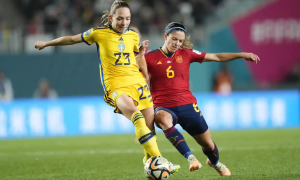
Having enjoyed her best-ever season at club level for Barcelona last season, Aitana Bonmati certainly took that momentum into this World Cup as she finished as Spain’s joint top goal contributor alongside Jennifer Hermoso with three goals and two assists apiece.
Bonmati however has quietly been Spain’s midfield engine with her impressive pressing ability from which she isn’t afraid to drive forward on the attack, whilst creating a variety of attacking passes and bravely attempting to score herself on multiple occasions.
The 25 year-old also isn’t afraid to get stuck in defensively with 12 blocks and although she made just three interceptions, her most important interception came against England’s Lucy Bronze in the Final to spark Spain’s decisive winner.
Now if she can continue to develop her game as she enters her peak years as a player, Bonmati will absolutely be a player which many defenders won’t want to take on in coming years such is her all-round midfield quality.
Midfielder – Hinata Miyazawa (Japan)
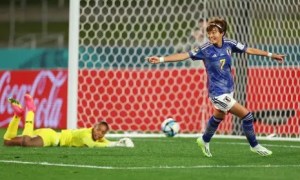
Coming into this tournament, hardly anyone considered Japan let alone Hinata Miyazawa to be potential highlights yet the 23 year-old emerged as the tournament’s top goalscorer and a stand-out midfield star.
Although she hasn’t exactly enjoyed a strong season at club level for Mynavi Sendai, Miyazawa certainly surprised on the world stage with her raw pace and positioning – of which both aspects proved key to her ability to score five goals to earn the Golden Boot award.
Even when not scoring goals, Miyazawa has shown herself to be adept at reading the game and predicting when and where to make her runs, before teammates or even opposition have attempted to make their runs or passes.
It however is easy to ignore Miyazawa considering that she is similar to Bonmati who has produced more memorable moments at this tournament, yet this 23 year-old is a clear versatile all-rounder in terms of her defensive and attacking game and deserves high praise.
Forward – Kadidiatou Diani (France)
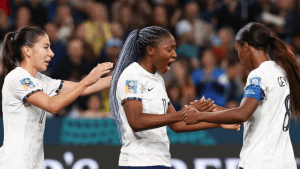
Kadidiatou Diani might not spring to mind as an instant stand-out forward but she has quietly been a stand-out player with contributions to seven of France’s 12 goals – four goals and three assists.
Diani also had only scored one goal at a major tournament yet at 28 year-old, she unexpectedly emerged as a underrated highlight with her work rate and ability to not only score but create goals.
We should also factor in the fact that she had ruled herself out of the national team in February due to unhappiness under ex manager – Corinne Diacre, yet she has emerged as one of their best players under Herve Renard in just the space of a few months.
France even hadn’t played a proper competitive match under Renard prior to the tournament which only adds further context to just how well Diani has done at this tournament, especially considering that she isn’t the best pass player yet she maximised what she did on the ball.
If she can create this much impact at a World Cup with just a few months of game time under Renard, she will definitely be one to watch on home soil at next summer’s Olympics in Paris.
Forward – Salma Paralluelo (Spain)
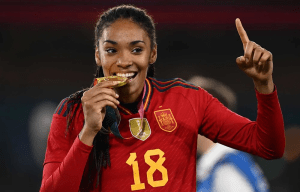
At just 19 years-old, Spain’s Salma Paralluelo emerged as one of the stand-out young talents having previously won the FIFA Under-17s and U-20s Women’s World Cup with Spain in recent years.
Yet there was little expectation that she would be one of Spain’s surprise performers, especially after having little impact as a starter during their opening four matches – which included their 4-0 loss to Japan in Spain’s final group match.
Her removal from the starting line-ups against Netherlands and Sweden therefore were of little shock, yet she was able to deliver her best as an impact substitute as she netted an extra-time winner against the Dutch, followed by a breakthrough opening goal in that dramatic win over the Swedish.
Paralluelo’s spacial awareness and positioning plus slices of luck in poor marking of herself however were key to her two goals, but she is clearly brave in her shot-making with a joint-high 19 shots in total plus six shots on target for Spain alongside Bonmati and Hermoso.
This 19 year-old though is fearless when it comes to taking on oppositional defences with more successful take-ons than her teammates, having managed to win five take-ons against oppositional defenders to create shot attempts with raw agility and movement.
Of course Paralluelo isn’t the finished player yet but if she can build upon the positives of this tournament and continue to develop her end product, she will eventually become a world-class forward which few defenders will relish marking.
Forward – Lauren Hemp (England)
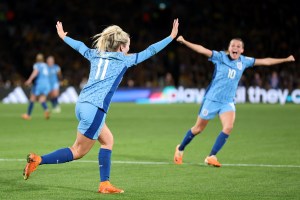
Whilst England fell short in the final, there is no doubting Hemp’s quality because she has been one of the most consistent players in the tournament.
Whether she played as a left-wing forward or in a central partnership with Alessia Russo once Sarina Wiegman switched to 3-5-2 formation mid-tournament, Hemp has been a constant menace with her physicality, movement, positioning and pace for many oppositional defences.
It is therefore little surprise that she averaged 2.6 in expected goals per game compared to her teammates, such was her attacking prowess and clinciality compared to Russo in terms of converting seven of her 13 shots onto target, of which three shots ended up as goals.
In fact, this tournament was a breakthrough campaign for Hemp who had been overshadowed by Beth Mead at last summer’s Euros, yet she stepped up and replaced the absent Mead in terms of quality and consistency albeit on the left rather than right flank.
Hemp’s task now is to take this form into the UEFA Women’s Nations League because once Mead returns to the squad, those two plus Russo will be a hellish front three for any defence to handle.
Manager – Jorge Vilda (Spain)

Amidst controversy surrounding his coaching methods which saw several players refuse to play under him – despite three of those players returning for this World Cup, Spain’s Jorge Vilda deserves credit for how he has overseen Spain’s rise whilst under intense scrutiny.
From his possession-based style of play with a high press approach off the ball and smart substitutions, Vilda ensured that Spain delivered entertaining football complete with ruthless finishing and a solid game plan which every player applied effectively within their roles.
Huge credit also must go to him for how he personally weathered criticism and rifts with various players which were even on show during games, especially during moments when players like Alexia Putellas shunned him yet he still managed to guide them to a first title.
This achievement now has to serve as a launchpad for Spain to unite and further develop their women’s game with Vilda spearheading their bids to win UEFA Women’s Nations League and Euro titles within the next two years.
Vilda could even have a shot at guiding Spain to Olympics glory if they can qualify by reaching Women’s Nations League Final, due to a change in UEFA’s Olympics qualification from previous years yet he has to use this success to unite every Spanish player and prevent a widening rift.
Leave a Reply