


As 2023 FIFA Women’s World Cup draws closer, here is a look at five managers looking to shine at the tournament.
Whilst all eyes will naturally be on the on-pitch talent, there will be plenty of attention upon various managers for different reasons as some prepare for their first World Cup experience, whilst others are eying glory after missing out in 2019.
There are also a mixture of challenges on and off the pitch which will motivate some more than most to deliver a successful tournament for their nation, amidst some civil unrest within some nations which will pose a huge question over those specific teams heading into the World Cup.
Now, here is a guide to five managers to watch out for across the tournament in Australia and New Zealand between 20 July – 20 August.
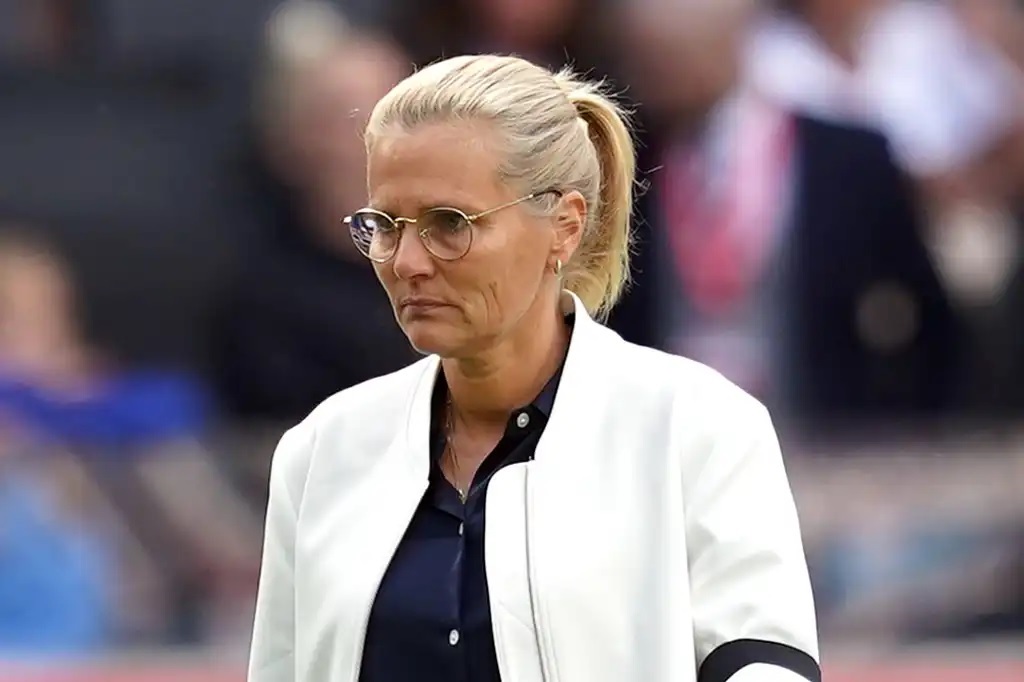
Sarina Wiegman (England)


Having reached the Final in three of her last four major tournaments with Netherlands and England, all eyes will be on Sarina Wiegman as she chases another chance at World Cup glory – having fell short with the Dutch in 2019 against USA.
Wiegman also for the second consecutive World Cup is entering the tournament with the reigning European champions but this time might be her biggest challenge, having seen her England squad evolve quite heavily compared to their UEFA Women’s Euro success due to a mixture of retirements and injury.
England however have lost just one of 32 matches under Wiegman in all competitions since she took over in September 2021, during which they’ve claimed two titles – UEFA Women’s Euros and Women’s Finalissima, so confidence and expectations will be high amongst the team and fans alike.
Wiegman though could find herself having to navigate England through a difficult knockout path with tournament co-hosts, Australia expected to be in their half of the knockout stages, as will Brazil, Canada, France and Germany with USA widely tipped to be their opposition if they reach the Final.
Either way, this tournament promises to be Wiegman’s great test yet as England manager with more pressure upon the team than ever before.
Vlatko Andonovski (USA)

Having overseen a period of transition with former lead star, Carli Lloyd having retired whilst several players from the victorious 2019 squad were dropped, Vlatko Andonovski now faces the difficult task of justifying his revamp by leading the Americans to a successful title defence.
Andonovski however has the tough task of dealing with 14 players who are making their World Cup debuts like Alana Cook, Kristie Mewis and Sophia Smith, which is no mean feat when other nations like Spain and England have cut the quality gap to the world’s best women’s team.
Last Autumn in particular exposed the kind of challenge that awaits Andonovski as USA lost three of their last four fixtures of 2022, which came against England, Spain and Germany – although they did win their final match of that year against Germany in a two-legged friendly.
Andonovski has since led USA to an unbeaten start to this calendar year with eight wins during which they scored 19 goals, and conceded just one goal which came in a 2-1 win over Brazil in their final SheBelieves Cup game in February.
USA though are in a tough group where Netherlands and Portugal are expected to challenge them hard for a place in the two knockout qualification spots, meaning that an early shock could be on the cards if Andonovski’s revamped squad struggle to hit the high notes on the world stage.
Tony Gustavsson (Australia)

As joint tournament hosts alongside New Zealand, Australia know that expectations will be high with Tony Gustavsson tasked with the challenge of delivering Australia a first major senior title in international football.
Gustavsson will be bolstered by the Socceroos’ strongest squad yet packed with high-quality experience and one of the world’s leading stars, with Sam Kerr set to spearhead their title challenge Down Under on home soil.
All eyes though will be on Gustavsson who was part of Jill Ellis’ coaching staff as USA won 2015 and 2019 World Cups, meaning that there will be a feeling that now is his time to step up and lead Australia to glory even though the Socceroos’ path to possible title success looks quite difficult.
The 49 year-old however only has one title to his name as a manager from his time in charge of Tyreso FF, which only heaps extra pressure on the Swede to deliver success for the Socceroos and establish Australia’s place amongst the major nations in women’s football.
Herve Renard (France)

Although France’s main focus is largely on preparation for their home Olympics next summer, this tournament will be an early test for their manager, Herve Renard who only took charge in late March – following Corine Diacre’s sacking due to a fall-out with the playing squad – and is inexperienced in the women’s game.
Renard though has international experience after having guided Zambia and Ivory Coast to Africa Cup of Nations success in 2012 and 2015 respectively, whilst he also guided Saudi Arabia to 2022 FIFA Men’s World Cup where they upset eventual winners, Argentina, in their opening match.
A Women’s World Cup though marks new territory for Renard and despite enjoying victorious friendly wins over Colombia and Canada, Renard now faces a difficult task of guiding France through a tough group containing Brazil, Jamaica and Panama and a difficult knockout path.
Either way, this is a huge chance for Renard to make an instant impact in the women’s game and build confidence amongst French supporters heading into their home Olympics next summer.
Jorge Vilda (Spain)

Having underperformed at UEFA Euro 2022 which saw them suffer a difficult Quarter-Final exit against eventual winners – England, Spain now head into this tournament under pressure to deliver with this ‘golden generation’ containing players like Irene Paredes and Alexia Putellas.
Jorge Vilda has overseen three disappointing tournaments of underperformance since he took charge following the 2015 World Cup, and now has had to cope with discontent amongst players over his coaching which saw 15 players withdraw their international availability.
Those issues however seeped deeper beyond the national team and into the Spanish domestic game this season, particularly within Barcelona, Real Madrid and Real Sociedad players – of which many are in the squad meaning that Vilda now must manage tensions as well as performance.
This tournament is therefore set up to be a huge story for Spain and Vilda because they can either overcome adversity to claim World Cup glory, or suffer a similar fate to Belgium Men’s ‘golden generation’ where their peak has passed without awards for their efforts.
For Vilda in particular, there is little doubt that this World Cup is pivotal to his future because if Spain underachieve then it is hard to see him staying on as manager for UEFA Women’s Euro 2025.