
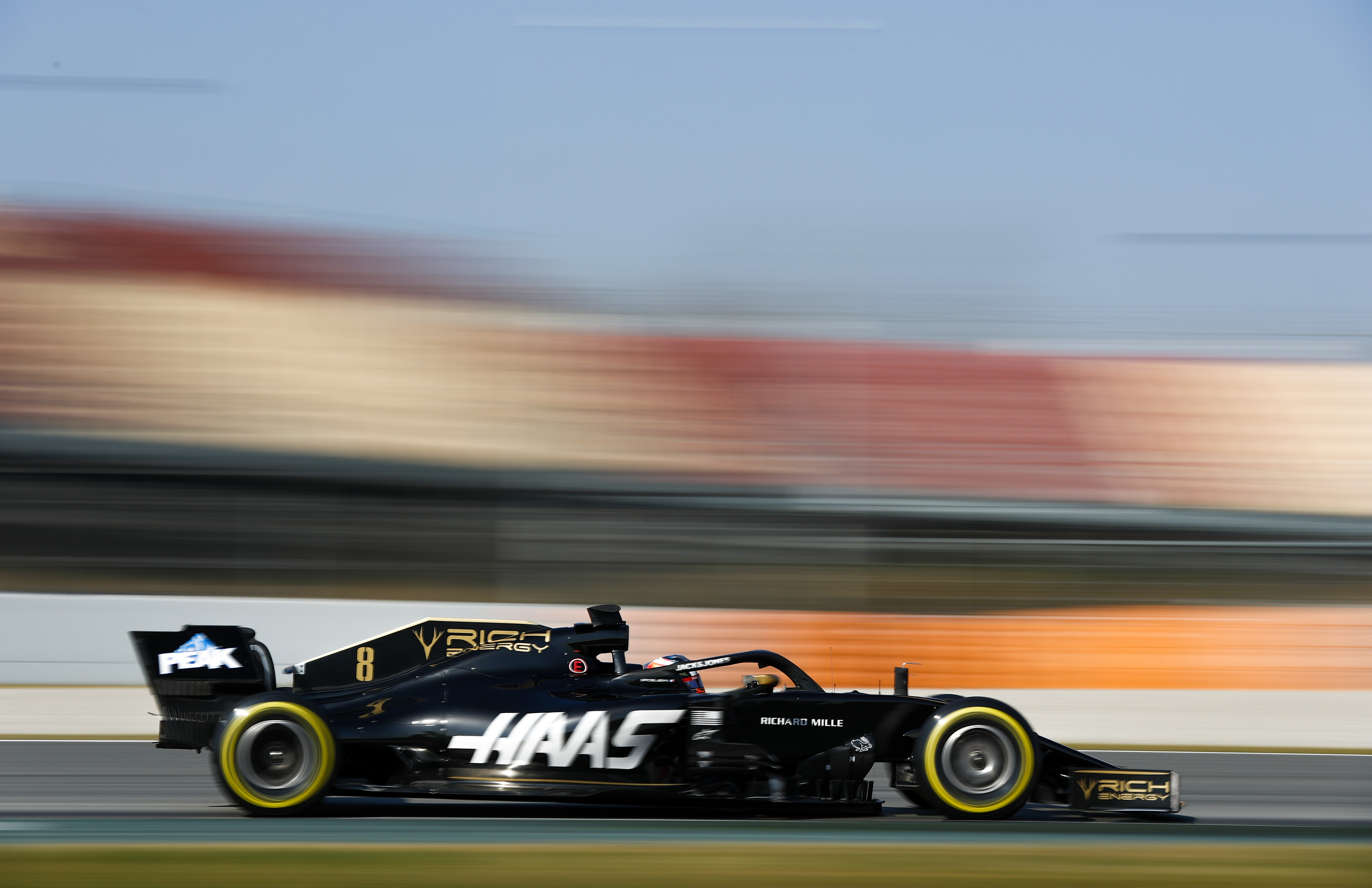
With pre-season testing over, here’s a guide to the 2019 F1 season which kicks off Down Under in Melbourne in a week’s time.
Lewis Hamilton enters this season looking for his sixth World Championship but following huge rule changes, this is going to be one of the toughest F1 seasons ever with several teams looking to knock Hamilton and Mercedes off their perch across 21 races.
Now get up-to-date for the new season with the latest driver and regulation changes, plus all the dates for this year’s race calendar to add to your diaries.
Teams and Drivers
| Team | Driver | Driver |
| Mercedes | Lewis Hamilton | Valtteri Bottas |
| Ferrari | Sebastian Vettel | Charles Leclerc |
| Red Bull | Max Verstappen | Pierre Gasly |
| Renault | Nico Hulkenberg | Daniel Ricciardo |
| Haas | Romain Grosjean | Kevin Magnussen |
| McLaren | Lando Norris | Carlos Sainz |
| Racing Point | Sergio Perez | Lance Stroll |
| Alfa Romeo | Kimi Raikkonen | Antonio Giovinazzi |
| Toro Rosso | Daniil Kvyat | Alexander Albon |
| Williams | Robert Kubica | George Russell |
Driver Changes:
- Daniel Ricciardo has left Red Bull after five years for Renault and will be replaced by Pierre Gasly, who has been promoted from Toro Rosso.
- Gasly’s promotion at Red Bull meant that Carlos Sainz switches to McLaren from Renault, where he will partner 2018 F2’s Vice Champion – Lando Norris.
- Charles Leclerc moves to Ferrari after an impressive rookie season at Sauber. Kimi Raikkonen therefore heads the other way to join the newly rebranded Alfa Romeo Racing.
- Ferrari junior, Antonio Giovinazzi will partner Raikkonen at Alfa Romeo, having initially filled in for injured Pascal Wehrlein in opening two rounds of 2017 season for then Sauber team in first two races.
- Alexander Albon has graduated from F2 and will race for Toro Rosso and will race alongside the returning Daniil Kvyat, who spent last year testing for Ferrari.
- Lance Stroll departed Williams for Racing Point meaning that Esteban Ocon drops out and is now Mercedes’ reserve/test driver.
- Robert Kubica returns to F1 after a seven season absence and will drive for Williams, partnering 2018 F2 Champion, George Russell who replaces Sergey Sirotkin.
Team Changes:
- Following last summer’s buyout of Force India, Racing Point has dropped the former from its name and is now known as Racing Point.
- Sauber were renamed Alfa Romeo Racing as part of a new sponsorship deal, marking Alfa Romeo’s return to F1 for the first time since their second stint ended 1985.
Calendar
| Race | Circuit | Date |
| Australia | Albert Park | 15-17 March |
| Bahrain | Sakhir | 29-31 March |
| China | Shanghai International Circuit | 12-14 April |
| Azerbaijan | Baku City Circuit | 26-28 April |
| Spain | Circuit de Catalunya | 10-12 May |
| Monaco | Circuit de Monaco | 23-26 May |
| Canada | Circuit Gilles Villeneuve | 7-9 June |
| France | Circuit Paul Ricard | 21-23 June |
| Austria | Red Bull Ring | 28-30 June |
| Great Britain | Silverstone | 12-14 July |
| Germany | Hockenheimring | 26-28 July |
| Hungary | Hungaroring | 2-4 August |
| Belgium | Spa Francorchamps | 30 August – 1 September |
| Italy | Monza | 6-8 September |
| Singapore | Marina Bay Street Circuit | 20-22 September |
| Russia | Sochi Autodrom | 27-29 September |
| Japan | Suzuka | 11-13 October |
| Mexico | Autodromo Hermanos Rodriguez | 25-27 October |
| USA | Circuit of the Americas | 1-3 November |
| Brazil | Interlagos | 15-17 November |
| Abu Dhabi | Yas Marina Circuit | 29 November – 1 December |
Rule Changes
Technical:
- Front wing will be 200mm wider with an increased height by 20mm and has been moved forward by 25mm in an attempt to aid overtaking when chasing cars.
- Complex endplates which outwashes airflow around front tyres are banned.
- Only two under wing strakes are allowed on each side of the car so less sensitive to aerodynamic disturbance.
- Bargeboards must be reduced in 150mm in height and moved forward 100mm so joins airflow from front wing up better.
- Rear wing have been increased by 100m with height now 20mm taller.
- DRS opening has been increased by 20mm to provide additional power.
- Two additional rear lights on each end plate to help aid visibility in poor weather conditions and must be lit at all times if on intermediate or wet tyres.
- Fuel allowance has been increased to 110kg, up from 105kg allowed in 2018.
- Driver and car weights will be considered separately so minimum weight of car is now 740kg with 80kg coming from the driver. Lighter drivers can use ballast to meet the minimum weight on condition that it is positioned in the cockpit area.
- Only three types of tyres will be brought to race weekends (white-marked hard tyre, yellow-marked medium tyre and red-mark soft). Instead the actual compounds have been numbered 1-5 with 1 representing the hardest compound and 5 the softest.
Driver:
- Drivers must wear biometric gloves which monitors their pulse rate and oxygen levels in their blood.
- Helmets must adhere to the new FIA 8860-2018 standard.
Miscellaneous:
- All cars must be self scrutineered at start of race weekend and competitors must sign a declaration to state that they’re complying with the rules.
- At end of race, a chequered light panel will be shown alongside the traditional chequered flag.
- Overtaking on race restarts is now not permitted until the car has crosses the start/finish line, rather than the earliest safety car line as in past.
Leave a Reply