


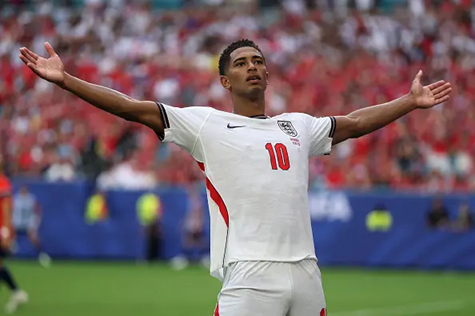
As the dust settles on the 2026 FIFA World Cup, it’s time to reflect on the stand-out stars in this XI.
In a tournament which saw 48 teams participate and delivered 308 goals in 104 matches, there were plenty of stand-out moments and performances, so it is right to reflect on the 11 best players of the tournament in this XI.

Goalkeeper
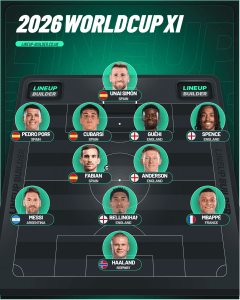
Whilst there has been numerous exceptional goalkeeping exploits from Cape Verde’s Vozinha to England’s Jordan Pickford, Spain’s Unai Simon stood out the best.
With just one goal conceded all tournament, Simon showed incredible composure and focus on a consistent basis whilst his distribution variety added an extra edge to Spain’s defensive display, underlining just why nobody else came close all tournament.
Defence
At right-back, no player has been more consistent than Spain’s Pedro Porro with his all-round play, from his stronger attacking contributions to his defensive work compared directly to his fellow Spanish defenders, which also saw him score twice to underline his successful tournament.
Porro’s teammate, Pau Cubarsi also deserves to be in the XI because at just 19-years-old, he didn’t seem daunted throughout the tournament as he quietly shone in Spain’s resilient defence and matched his experienced partner, Aymeric Laporte attacking wise to his credit.
Cubarsi also produced the highest number of passes (690) amongst defenders at the tournament, which further solidified the quality of his displays when in possession with composure and confidence.
England’s Marc Guehi is another centre-back who has been rock solid defensively across the tournament with more minutes than his teammates, whilst he quietly fulfilled his defensive duties calmly despite not lighting up the Three Lions’ statistics.
The left-back position was an easy choice because England’s Djed Spence absolutely stood out with his defensive robustness on the left flank, whilst using explosive energy and pace to attack up the left flank to be influential on the attacking play selflessly without taking chances upon himself.
Midfield
Starting with defensive midfield, Spain’s Fabian Ruiz deserves massive credit because he has consistently matched his teammate, Rodri but brought more attacking quality combined with the defensive midfield duty, whilst his composure shows why Spain haven’t lost when he features in the team after 50 caps.
England’s Elliot Anderson is another name who deserves credit because in his first major tournament just months after the death of his mother, he was just exceptional in fulfilling his defensive duties whilst contributing to the attack efficiently as a solid bedrock of the team.
The fact that he won 18 tackles which is more than any other England player also showed why Anderson has made the list such is his impact within his defensive midfield role.
Irrespective of his dirty allegations about opposing players covering their mouths when speaking, Argentina’s Lionel Messi has made the list because he at 39-year-old still delivered magical game-changing moments and eight goals plus four assists shows how impactful he had been all tournament.
England’s Jude Bellingham undoubtedly was the obvious central attacking midfield pick because from his attacking quality to defensive contributions, he has undoubtedly enjoyed a quality World Cup with his eight goal contributions (7 goals + 1 assist) whilst frustrating oppositional defenders.
His braces against Mexico and Norway also were vintage top-quality finishes in two matches where England had to properly scrap their way through the Round of 16 and Quarter-Final stages respectively.
Across on the left wing, France’s Kylian Mbappe has again been exceptional attacking wise with 14 goal involvements (10 goals + 4 assists), whilst showing intelligent attacking press and movement to create chances on goals more effectively than Spain’s Lamine Yamal.
Forward
With Messi and Mbappe placed out on the wings in this XI despite playing up front all tournament, Norway’s Erling Haaland rounds off the line-up up front because he has enjoyed an impressive first major summer tournament with his team.
Already famed for his exploits at Manchester City and topped the goalscoring chart in UEFA Qualifying for this tournament, Haaland certainly made an impact with seven goals in his first four World Cup appearances – which included a brace against Brazil underlining his talent.
You therefore must give England serious credit for limiting and nullifying him in their Quarter-Final comeback win over Norway, otherwise it would of been interesting to see him vs Messi in the semi-final, but alas his impact was impressive enough to secure a spot in this XI.
Manager
If England manager, Thomas Tuchel hadn’t tactically bungled their semi-final against Argentina once in the lead, he would of been a strong candidate for the manager spot in this XI but fair play to him for guiding England to third and their highest finish since winning the title in 1966.
Spain’s Luis de la Fuente however has undoubtedly been a clear class above the cut because his calm management of the title winners was impressive, as evidenced by their robust defence with just one goal conceded and dominant attacking play.
He also demonstrated willingness to mix his selections up tactically as evidenced by four changes for their 4-0 win over Saudi Arabia, in the wake of a shock goalless draw against a low-blocking Cape Verde who too deserve credit for getting out of a tough group and taking Argentina to extra time in their Round of 32 exit.
De la Fuente also deserves praise for using his humble grassroots background to build a team that has unity, confidence and resilient spirit without any heavy egos, which has shown through the blend of youth and experience to follow up their UEFA Euro 2024 title with the World Cup honour.