


FIA have approved 2026 F1 power unit regulations plus updated technical rules for the current season.
Federation International de l’Automobile (FIA) officials have met today (16 August) and approved new power unit regulations for 2026 season, which comes after thorough extensive research involving current power unit suppliers as well as potential new power unit manufacturers.
As part of the new power unit regulations, teams will be required to produce power units which meets the FIA’s commitment to innovation and sustainability, whilst meeting the following four key elements of the regulation framework:
- Maintaining spectacle – 2026 power units will be expected to maintain similar performance to current designs, whilst utilising high-power, high-rev V6 international combustion engines and avoid heavy differentiation in performance.
- Environmental sustainability – 2026 power unit will feature an increase in deployment of electrical power of up to 50% plus utilise 100% sustainable fuel.
- Financial sustainability – Financial Regulations concerning power units will reduce overall costs for competitors, whilst ensuring continued technological showcase at core of F1.
- Attractive for new power unit manufacturers – Regulations are designed to make it possible and attractive for new suppliers to join F1 on a competitive level.
FIA President, Mohammed Ben Sulayem iterated that these new regulations for the 2026 season will help in a “push forward on innovation and sustainability” as part of long-term plans.
Expanding on approval of the new regulations, Ben Sulayem said: “The introduction of advanced PU technology along with synthetic sustainable fuels aligns with our objective of delivering benefits for road car users and meeting our objective of net zero carbon by 2030.
“Formula 1 is currently enjoying immense growth and we are confident these Regulations will build on the excitement our 2022 changes have produced.”
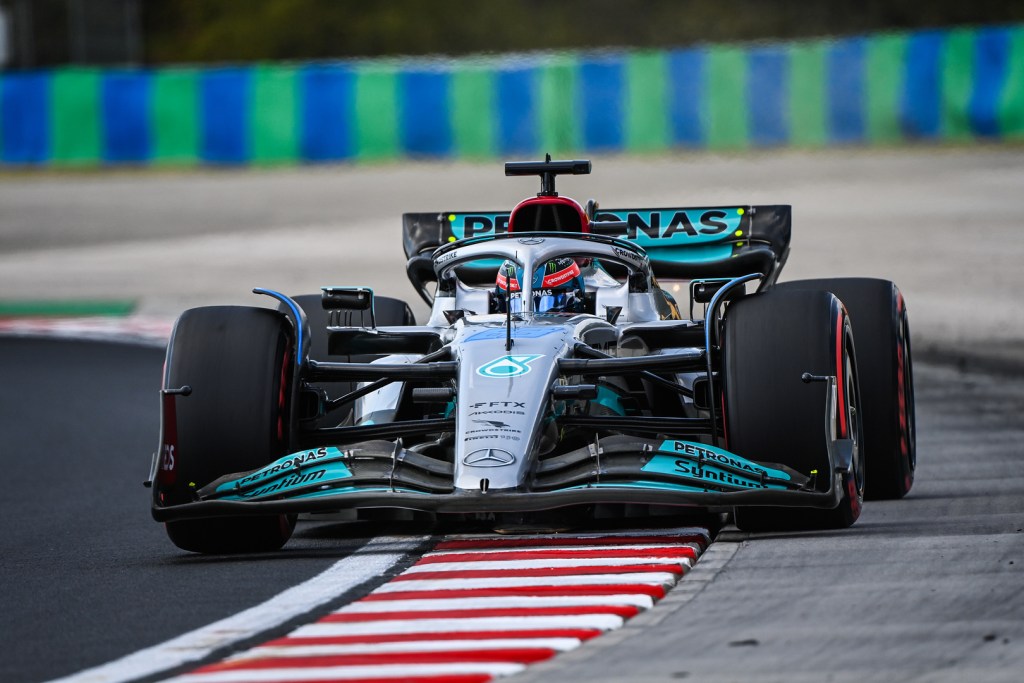
FIA also approved immediate changes to current technical regulations in order to tackle aerodynamic porpoising which has affected many teams this season, as well as roll hoop safety standards following a heavy crash for Guanyu Zhou at 2022 British Grand Prix at Silverstone.
In terms of addressing the issue of ‘porpoising’, the FIA will measure the porpoising whilst setting a maximum threshold to assure the safety of all cars, whilst the following rule will be applied for rest of season.
- Central Floor Flexibility – changes to re-define the stiffness requirements of plank and skids around the thickness measurement holes.
There will also be five further changes ahead of the 2023 season, including;
- Floor edges raised by 15mm.
- Diffuser throat height will be raised whilst care is taken to avoid impact on constructor designs of mechanical components.
- Diffuser edge stiffness will be increased.
- Additional sensor mandated in order to effectively monitor porpoising.
FIA also discussed the conclusions of an investigation into Zhou’s accident at Silverstone, in which it was found that the pointed top of the roll hoop had dug into the tarmac, ultimately contributing to the high horizontal force and subsequent breakage.
Current regulation wording also meant that teams could homologate their roll hoops with forces acting through a lower point than intended, which can lead to the roll hoop resisting forces lower than originally intended in the regulations.
FIA consequently found that ‘a significant increase in roll hoop strength’ is required in F1 with the following rule changes to be introduced next season:
- A change to require a rounded top of the roll hoop, which will reduce the chance of it digging into the ground during an accident.
- A change to ensure a minimum height for the point of application of the homologation test.
- Creation of a new physical homologation test where the load pushes the roll hoop in the forward direction.
- Definition of new tests to be carried out by calculation.
FIA have also confirmed that there is an objective to create ‘a significant overhaul of the roll hoop tests to ensure that cars in the future resist significantly more severe loads.’
These changes were also approved by the World Motor Sport Council.